
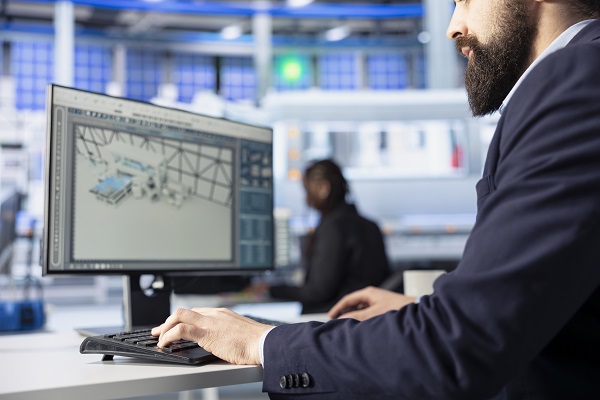
Technology is changing building safety: new tools for more advanced protection
Technology is changing building safety because it enables faster, more precise and better coordinated risk management. Today, installing separate devices is no longer enough: systems must be able to detect anomalies, share information and activate responses that are consistent with what is happening inside the building. Smart sensors, real-time monitoring and emergency sound communication help prevent critical situations and protect people, systems and operational continuity.
Within this scenario, KREA brings its expertise as a research and development company, specialising in gas detection, EVAC systems for voice evacuation and commercial audio systems. Thanks to a technical approach focused on integration and reliability, KREA develops solutions that connect prevention, alarms and communication. If you want to understand how technology is changing building safety, you need to consider the value of connected systems that can identify risks promptly and support more informed emergency management.
Technology is changing building safety through sensors and real-time monitoring
Technology is changing building safety because it makes it possible to monitor environments continuously and identify abnormal conditions before they develop into emergencies. Smart sensors collect data in real time and allow integrated safety systems to detect potentially dangerous changes, such as the presence of gas, an unusual increase in concentration levels or a malfunction. If the risk is identified promptly, you can activate targeted procedures and reduce the consequences for people, structures and operations.
Real-time monitoring goes beyond the logic of a simple alarm because it provides a constant overview of the building’s operating conditions. The main advantages of building safety technologies include:
- prompt detection of gas leaks and anomalies;
- continuous monitoring of environments and systems;
- rapid activation of alarms and safety procedures;
- shorter intervention times;
- greater protection for people and operational continuity.
The effectiveness of smart sensors, however, depends on the quality of the design, correct positioning and compatibility with the risk that needs to be monitored. When intelligent gas detection interacts with centralised safety management, the information becomes more useful and responses become better coordinated. This is how technology is changing building safety: it does not replace prevention, but makes it more precise, informed and responsive.
Technology is changing building safety through integrated systems and intelligent communication
Technology is changing building safety because it allows different installations to move beyond isolated management and operate as coordinated parts of a single system. When gas detection, alarms, EVAC systems and sound communication systems share information, the response to a critical event becomes faster and more consistent. It is not only a matter of detecting a risk, but of transforming the collected data into a precise action, which may include the activation of signals, voice messages and emergency procedures.
Integrated safety systems make it possible to manage information through a centralised overview, so that what is happening in the different areas of the building can be understood more clearly. If a sensor detects an abnormal condition, the system can activate responses calibrated to the real scenario and transmit specific instructions to the people present. Intelligent communication therefore reduces uncertainty and encourages more orderly behaviour.
This approach is particularly important in complex buildings, where spaces, flows and intended uses require differentiated interventions. A voice alarm can reach only the affected areas, while other devices support emergency control and system protection.
When building automation and centralised safety management work together, you can achieve more effective prevention and greater operational continuity. It is through this integration that innovation in safety makes buildings more connected, responsive and capable of protecting the people who use them.
Technology is changing building safety and improving emergency management
Technology is changing building safety also because it makes emergency management faster, more targeted and easier to understand. During critical moments, activating a generic alarm is not enough: information, devices and communications need to be coordinated so that each person receives instructions that are consistent with what is happening. If the system recognises the nature of the risk and distinguishes the areas involved, it can support more precise interventions and reduce disorientation.
Among the operational functions that improve emergency management are:
- broadcasting clear and timely voice instructions;
- activating alarms differently in separate areas;
- guiding people towards safe routes;
- coordinating sensors, EVAC systems and control devices;
- supporting faster decisions by operators.
Emergency sound communication therefore plays a central role because it transforms a danger signal into practical guidance. EVAC systems and voice evacuation help explain what to do, which areas to avoid and how to reach the exits in an orderly way.
When building automation, real-time monitoring and intelligent communication work together, the response to a critical event becomes more effective. This is how technology is changing building safety: it improves procedural coordination, reduces reaction times and makes the protection of people more informed and effective.
Technology is changing building safety with KREA: research and development for more reliable systems
Technology is changing building safety because it requires solutions capable of adapting to increasingly complex risks, spaces and patterns of use. Within this scenario, research and development play a decisive role because they make it possible to transform data, sensors and communication systems into truly reliable tools. KREA’s work is based on this vision, as a company specialising in gas detection, EVAC systems for voice evacuation and commercial audio systems.
KREA develops systems in which detection, alarms and communication can interact in a coordinated way. If a solution is designed around the characteristics of the building, its acoustic conditions and potential risk scenarios, it can promptly identify anomalies, deliver intelligible messages and support more orderly emergency management. Reliability therefore depends not only on the quality of individual devices, but also on the consistency of the entire project.
Research activity also makes it possible to improve precision, operational continuity and integration between building safety technologies. This approach allows solutions to be calibrated to real needs, rather than applying standard configurations to different contexts.
This is how technology is changing building safety with KREA: it makes prevention, real-time monitoring and sound communication part of a more informed, responsive system that is ready to protect people, installations and operational continuity.
Click here to contact us and find out more.
FAQ on how technology is changing building safety
How is technology changing building safety?
Technology is changing building safety because it makes it possible to detect anomalies promptly, monitor environments in real time and coordinate multiple systems through centralised management. Smart sensors, gas detection, EVAC systems and emergency sound communication help prevent risks and activate faster, more targeted responses.
Which technologies improve building safety?
The main building safety technologies include smart sensors, gas detection systems, voice alarms, EVAC systems, real-time monitoring platforms and integrated safety systems. Their effectiveness increases when the different devices communicate with one another and share useful data for managing critical situations.
Why is real-time monitoring important for safety?
Real-time monitoring makes it possible to continuously check building conditions and identify potentially dangerous changes before they reach critical levels. If an anomaly is detected quickly, alarms can be activated, intervention can be more precise and risks to people, installations and operational continuity can be reduced.
How do integrated safety systems work?
Integrated safety systems connect sensors, alarms, detection installations and communication systems within a coordinated management framework. When a risk is identified, the information can activate specific procedures, targeted warnings and voice messages that are consistent with the actual scenario. This makes the emergency response more orderly and effective.
What is the role of smart sensors in building safety?
Smart sensors detect parameters and abnormal conditions within environments, such as the presence of gas or changes that may indicate a malfunction. The collected data feeds monitoring systems and allows timely intervention. Correct sensor selection and positioning are essential for obtaining reliable information.
How do EVAC systems improve emergency management?
EVAC systems improve emergency management because they broadcast clear and intelligible voice messages that tell people what to do and which routes to follow. Compared with a simple acoustic signal, voice evacuation reduces disorientation and supports a faster, more orderly and more informed response.
Why integrate gas detection with emergency sound communication?
Integrating gas detection with emergency sound communication makes it possible to transform a technical alarm into instructions that people can understand. When the system identifies a dangerous condition, it can activate specific voice messages, guide behaviour and support procedures that are more consistent with the affected area and the detected risk.